
Design-Build vs. Traditional Builder: What Bend Landowners Should Know First
Bend landowners planning a custom build face a choice long before floor plans or finishes come up: work with a traditional builder who coordinates separate architects and contractors, or choose a design-build firm that manages the entire project under one roof. Understanding design-build vs traditional builder structures is the first real step in how to choose a custom home builder, since the delivery model shapes budget control, timeline, and how smoothly design decisions turn into construction.
This custom home builder selection guide breaks down what separates the two approaches, what to verify before signing with either, and where Select Design & Build’s design-build model — backed by more than 40 years of trade partnerships through the Pahlisch Homes family and recognition from COBA’s Northwest Street of Dreams — fits into that decision for landowners building on their own land in Central Oregon.
What Is the Difference Between Design-Build and Traditional Home Building?
The two models differ mainly in accountability. A traditional builder enters the project after an architect has already finalized the design, which means two separate contracts, two separate teams, and a landowner acting as the go-between whenever design and construction don’t line up. A design-build firm removes that gap by keeping architecture, engineering, and construction under a single contract and a single point of responsibility.
How does a traditional builder’s process typically work?
Landowners hire an architect first, finalize drawings, then bid the completed design out to contractors. Changes discovered mid-construction often require revisiting the architect, renegotiating scope, and absorbing delays neither party fully owns. This sequential structure can work well for landowners who want an independent architect’s perspective, but it places the coordination burden on the landowner.
How does the design-build model streamline the process?
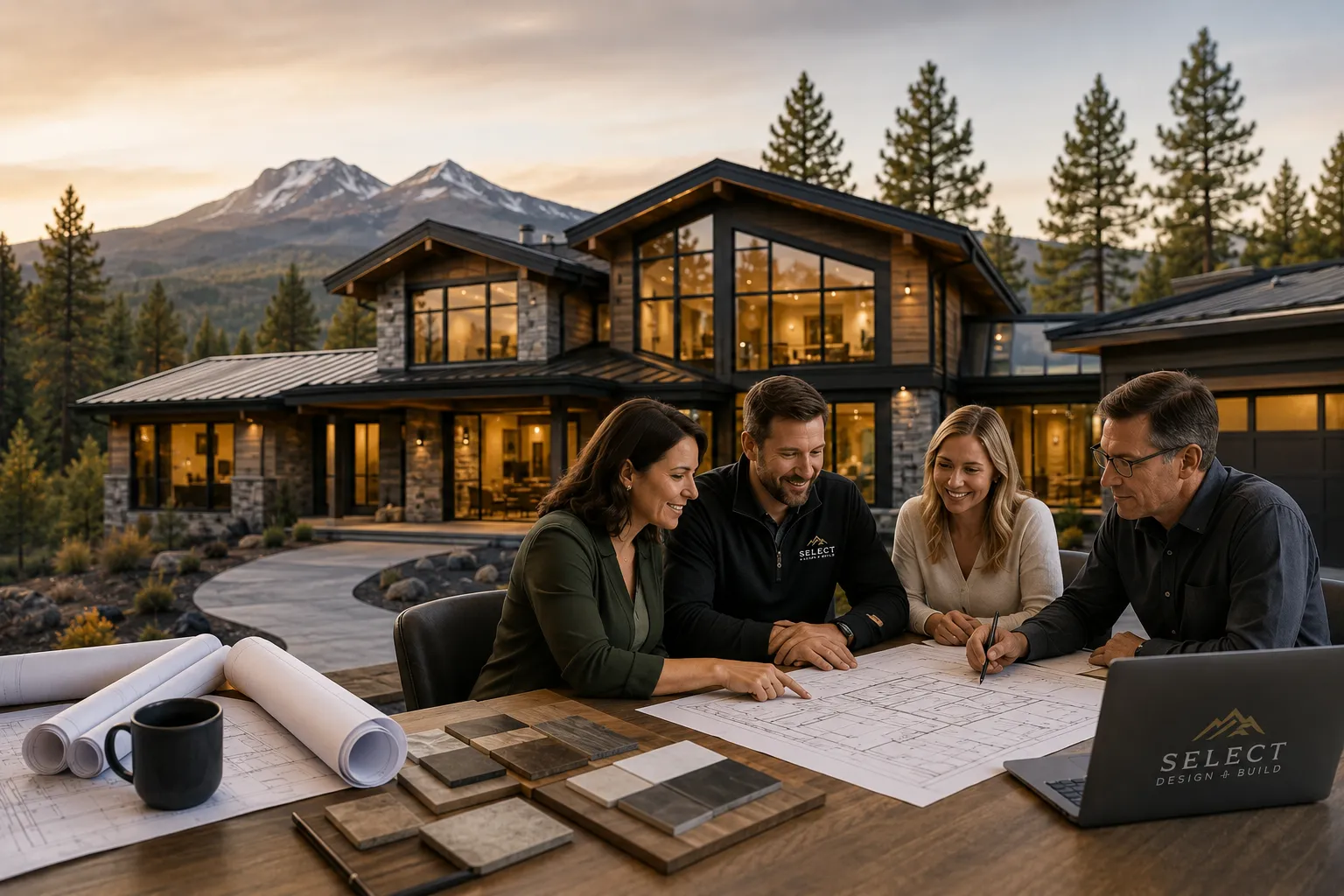
Design-build firms bring architects, interior designers, CAD specialists, and construction managers into the same conversation from day one. Design decisions are tested against buildability and budget in real time, rather than discovered after drawings are finalized. Select Design & Build, part of the Pahlisch Homes family, structures its process this way, guiding Central Oregon landowners from initial concept through move-in with one accountable team.
Why Does the Design-Build Model Matter for Your Custom Home Builder Selection?
Choosing between models affects more than convenience — it affects budget certainty and how disputes get resolved when they arise. Under a traditional structure, cost overruns or design conflicts can become finger-pointing between architect and builder. Under design-build, one firm owns both the design and the price tag, which tends to keep budgets more predictable on land-specific builds like ADUs, renovations, or fully custom homes.
What should you prepare before comparing builders?
Two things matter most before interviewing either type of firm: proof of financing and a clear picture of the home itself.
Construction mortgage preapproval from a lender confirms budget and demonstrates financial credibility to builders and real estate professionals alike. Without it, a landowner risks falling for a design that exceeds actual borrowing power. Preapproval also speeds up early conversations, since builders — design-build or traditional — can propose realistic options from the first meeting.
Home type matters just as much as financing. Builders often specialize in specific price ranges or project types, so define which category fits your land and lifestyle before reaching out:
-
Whole-home renovations for existing properties
-
ADUs (accessory dwelling units) for extended family or rental income
-
Barndominiums and investment properties
Select Design & Build, based in Bend, Oregon, guides landowners through each of these paths as a built on your land home builder, from initial concept through move-in day.
What Questions Should You Ask Design-Build and Traditional Builders?
Verification starts with credentials, awards, and a track record clients can check, regardless of which model you’re comparing. These questions to ask custom home builders apply whether you’re sitting down with a design-build firm or a traditional contractor:
-
How is quality control handled across design and construction phases, and who is accountable if something is missed?
-
What purchasing power and trade relationships does the firm bring to materials and subcontractors?
-
Does the company’s approach balance luxury with cost efficiency, or does it favor one over the other?
-
Where does the firm actively build, and how familiar is it with local permitting and terrain?
-
Can the firm provide independent recognition, such as awards or association membership, confirming outside evaluation of its work?
How can you verify a builder’s reputation locally?
Start with the local home builders’ association. Associations maintain lists of builders actively constructing homes in a given area, making them a reliable first checkpoint before signing with either a design-build firm or a traditional contractor. Independent honors matter too — Select Design & Build’s in-house team has earned recognition from COBA’s Northwest Street of Dreams, including Best in Show and Best Value distinctions, the kind of outside evaluation a landowner can’t get from a builder’s own marketing.
Does a builder’s industry network matter?
Yes, under either model. A builder connected to a larger family of brands often carries more leverage and stability. As part of the Pahlisch Homes family, Select Design & Build draws on more than 40 years of trusted trade partnerships and strong purchasing power — benefits that smaller independent builders, design-build or traditional, may struggle to match.
What Mistakes Should You Avoid When Choosing Between Design-Build and a Traditional Builder?
Selecting the wrong builder, or the wrong model for your project, leads to poor-quality construction, budget overruns, and communication breakdowns that surface only after ground breaks. Landowners researching how to choose a custom home builder sidestep these pitfalls by treating the search with the same scrutiny given to the home design itself.
Common mistakes include:
-
Chasing the lowest bid without comparing scope
-
Assuming a traditional builder and a design-build firm will quote the same total cost for the same result
-
Skipping regional experience checks
-
Signing on before meeting the design team
Why does choosing the cheapest builder backfire?
Base price comparisons between builders rarely match apples to apples, and comparing a design-build quote to a traditional builder’s bid is even harder without checking what’s included. A lower number often hides missing materials, weaker warranties, or scaled-back finishes that cost more to fix later.
How can buyers confirm a builder knows their region?
Ask directly where the company actively builds. A firm working across Bend, Portland, and Southwest Washington, for instance, understands regional permitting and terrain challenges that out-of-area builders miss — a factor that matters under either delivery model.
Skipping a design consultation ranks among the costliest errors, whichever structure you’re leaning toward. A complimentary meeting lets buyers ask hard questions and gauge whether the builder commits to open communication before any contract is signed.
FAQ
What is the real difference between design-build and traditional building?
A traditional builder joins the project after an architect finalizes the design, working under a separate contract. A design-build firm manages architecture, design, and construction under one contract and one accountable team, which tends to reduce miscommunication and change-order surprises.
How do you decide between a design-build firm and a traditional builder in Bend?
Compare financing readiness, project type, and how each firm handles quality control and budget accountability. If a single point of contact and coordinated in-house design matter to you, a design-build firm such as Select Design & Build may fit better than the traditional architect-then-builder sequence.
What questions should you ask before hiring a custom home builder?
Ask how quality control is managed, what trade relationships the firm brings, whether the firm has independent industry recognition, and where the company actively builds. Confirm financing preapproval and define your project type — custom home, renovation, ADU, or barndominium — before comparing quotes.
What makes Select Design & Build a strong design-build option in Bend, OR?
Select Design & Build offers award-winning floor plans built on your own land, backed by over 40 years of trade partnerships through the Pahlisch Homes family. Its in-house team includes licensed architects, interior designers, CAD specialists, and construction managers working under a single design-build contract.
Conclusion
Choosing between design-build and a traditional builder comes down to how much coordination you want to manage yourself. A traditional path can work for landowners who want an independent architect’s voice, but it places the burden of aligning design and construction on you. A design-build firm removes that gap, pairing in-house architects, interior designers, CAD specialists, and construction managers under one accountable team from concept through move-in. Whichever path you choose, verify licensing, check independent industry recognition, confirm financing, and ask direct questions about quality control and regional experience before signing — the model matters, but the builder behind it matters more.